
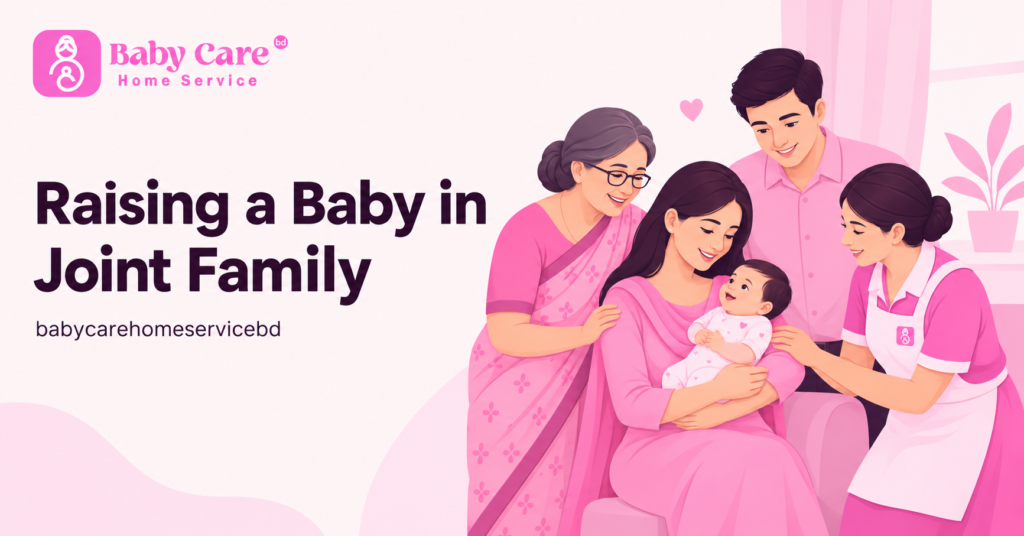
Your baby is only a few weeks old. The house is full of voices. Grandma is giving advice, an aunt wants to hold the baby, and all you want is one hour of sleep. Sound familiar?
Raising a baby in joint family life has many warm moments. It also has a few hard ones. Many couples in Dhaka now ask the same thing. Is raising a baby in joint family really better, or should we live on our own?
There is no single right answer, because every home is different. In this guide, we will look at both sides in simple words. You will see the good parts, the problems, the costs, and some easy fixes. We will also talk about how nanny care at home can help in both types of families.
What Is the Difference Between a Joint Family and a Nuclear Family?
A joint family has parents, children, grandparents, and often uncles and aunts living under one roof. A nuclear family has only the parents and their children.
In a joint family, the kitchen is shared and money is often shared too. Big choices are made together. In a nuclear family, the mother and father decide most things on their own.
| Feature | Joint Family | Nuclear Family |
|---|---|---|
| Who lives together | Parents, grandparents, uncles, aunts, cousins | Mother, father, children |
| Who decides | Elders and parents together | Parents only |
| Baby care | Shared by many people | Mostly by the mother and father |
| House cost | Shared by all | Paid by the couple |
| Privacy | Less | More |
| Noise and crowd | More | Less |
Think of it like this. In a joint family, a baby may have six or seven people watching over him. In a nuclear family, the baby may have just two. That one fact changes almost everything about how you raise a child.
Is Raising a Baby in Joint Family Better Than in a Nuclear Family?
Not always. Raising a baby in joint family life gives you more helping hands and more love, but less privacy and more mixed advice. A nuclear family gives you more control, but also more tiredness.
It depends on your health, your job, your house size, and how well everyone gets along. A joint family works well when the elders are kind and open to new ideas. A nuclear family works well when the parents have steady help, such as a trained nanny or a close relative nearby.
So the question is not “which is best?” The better question is “which one fits our life right now?”
Benefits of Raising a Baby in Joint Family
Let’s start with the good news. There are many reasons why people still love this way of life.
More Hands to Share the Work
A newborn needs feeding, burping, bathing, and changing all day and night. That is a lot for two people. Raising a baby in joint family means someone is almost always free to help. When mom takes a nap, grandma can rock the baby. When dad is at work, an aunt can watch the little one while mom takes a shower in peace.
Plenty of Love and Emotional Safety
Babies feel safe when they see familiar faces. In a joint family, a baby gets hugs from grandparents, cousins, and uncles every day. This kind of love makes a child feel secure. New mothers also feel less alone, which matters a lot in the first few months.
Learning Family Values and Language
Grandparents tell stories, sing old songs, and share family habits. A child growing up this way picks up good manners, respect for elders, and a strong Bangla language base without any special effort. These small things stay with a person for life.
Lower Cost
Rent, food, and bills are shared. That leaves more money for baby needs like vaccines, diapers, and doctor visits. For young couples starting out in Dhaka, where house rent is high, this can be a big relief.
Help for Working Parents
In Dhaka, many mothers and fathers both work. Raising a baby in joint family makes this much easier, because a grandparent or aunt is usually home. You do not have to rush to find a daycare on day one.
Problems of Raising a Baby in Joint Family
Now for the other side. Many parents do not talk about these problems out loud, but they are real.
Too Many Opinions
When it comes to raising a baby in joint family life, advice comes from every direction. Grandma says to feed more. Aunt says to feed less. Someone else says the baby is cold, and another says the baby is hot. A tired new mother can feel lost.
Old Home Tips vs. Doctor’s Advice
Some old habits are not safe today. Here are a few common ones:
- Giving honey to a baby under one year. Doctors say this can be dangerous because of a rare but serious illness.
- Giving water to a baby under six months. Health experts say breast milk alone is enough for the first six months.
- Putting kajal or oil in a baby’s eyes or nose. Ask your child’s doctor before doing this.
You do not need to fight about these. Just show what the doctor said, politely.
Less Privacy
New parents need quiet time with their baby. In a crowded house, this can be hard. Breastfeeding, for example, feels easier when the mother has a calm, private space.
Germs and Crowds
More people means more hands touching the baby. Visitors come and go. Someone may have a cold or fever and still hold the baby. Newborns have weak defenses, so this can lead to sickness.
Sleep Trouble and Noise
TV, loud talking, and cooking sounds can wake a sleeping baby. A baby who does not sleep well makes the whole house tired.
The Mother May Feel Judged
Some mothers feel that everyone is watching them. Every cry, every spit-up, and every skipped feed becomes a topic. This can hurt confidence and mood.
Quick Pros and Cons Table
| Pros | Cons |
|---|---|
| Many helping hands | Too many opinions |
| More love and company | Less privacy |
| Shared cost | Germs from many visitors |
| Family values and stories | Old ideas that may not be safe |
| Help for working parents | Mother may feel judged |
How Does Raising a Baby in a Nuclear Family Work?
In a nuclear family, the mother and father do most of the baby care themselves. They make all the choices, but they also do all the work.
Compared to raising a baby in joint family life, this way gives parents full control. You choose when to feed, when to sleep, and what to follow. Your home is quiet and clean, and you can follow the doctor’s advice without any argument.
But there is a price. Night feeds fall on just two people. If the mother is sick, there may be no one to step in. Many nuclear families in Dhaka solve this by hiring a nanny, calling a relative for a few weeks, or using a home care service.
Joint Family vs. Nuclear Family: Side-by-Side Baby Care Comparison
This table shows how raising a baby in joint family differs from raising a child in a nuclear home in daily life.
| Baby Care Area | Joint Family | Nuclear Family |
|---|---|---|
| Night feeding and waking | Shared by a few people | Mostly mother and father |
| Daytime help | Easy to find at home | Needs a nanny, relative, or daycare |
| Feeding and sleep rules | Many opinions | Parents decide |
| Rest for the mother | Better, if family is kind | Often less |
| Privacy | Low | High |
| Risk of germs | Higher | Lower |
| Cost | Shared | Higher for the couple |
| Baby’s social skills | Grows fast with cousins and elders | Grows with outside play and school |
| Stress level | Can rise from family pressure | Can rise from tiredness and loneliness |
Neither side wins every row. That is why many families mix the two ideas, taking the best from both.
How Does Raising a Baby in Joint Family Affect the Mother?
It can lower a mother’s workload and loneliness, but it can also add pressure and judgment. The result depends mostly on how kind and open the family is.
Many new mothers say the first 40 days were easier because the family took over cooking and housework. That rest is very important after birth. A mother who rests well heals faster and feeds the baby better.
On the other hand, a mother may feel she has no say. If her mother-in-law makes every baby rule, she may feel her own role as a mother is small. This can lead to sadness or anger over time.
Here are a few ways to keep the mother happy and healthy:
- Give her at least one hour of rest every day.
- Let her make the final call on feeding and sleep.
- Praise her efforts in front of others.
- Make sure she eats well and drinks enough water.
- Watch for signs of low mood and talk to a doctor if sadness lasts more than two weeks.
How Does Raising a Baby in Joint Family Affect a Child’s Growth?
Raising a baby in joint family usually helps a child become social, confident, and caring. But too many caregivers with different rules can confuse a baby’s routine.
Babies learn fast by watching faces. In a joint family, they see many faces, hear many voices, and play with cousins. This helps with speech and manners. Children from joint families often feel comfortable around new people.
The trouble starts when everyone follows a different rule. One person lets the baby sleep late. Another wakes him early. One gives a snack, another says no. A baby needs a steady pattern to feel safe. So it helps to pick one simple routine and share it with everyone.
How Can You Handle Advice from Elders Without a Fight?
This is the biggest worry for many young parents. The key is to stay calm and kind. Here is a simple plan:
- Listen first. Let the elder finish. Say “Thank you, I will think about it.”
- Show a doctor’s words. Saying “The doctor told us this” is softer than saying “You are wrong.”
- Pick your battles. Let small things go. Stand firm only on health and safety.
- Give elders a job. A grandmother who tells stories or sings lullabies feels needed and valued.
- Talk as a couple first. Mom and dad should agree on the main rules before they speak to the family.
- Take the doctor along. Sometimes the whole family should hear it straight from the doctor during a visit.
The golden rule for raising a baby in joint family is simple: respect first, rules second. When elders feel heard, they are far more willing to listen.
Simple Daily Routine Tips for Raising a Baby in Joint Family
A shared routine keeps the baby calm and the family happy. Here is an easy sample plan. You can change it to suit your home.
| Time | Baby Task | Who Can Help |
|---|---|---|
| Early morning | Feeding, diaper change | Mother |
| Mid-morning | Bath, oil massage as advised by doctor | Grandmother or nanny |
| Late morning | Nap time in a quiet room | Aunt or nanny |
| Afternoon | Feeding, play, tummy time | Mother and cousins |
| Evening | Light play, family time | Father, uncle |
| Night | Feeding, soft lullaby, sleep | Mother and father |
A few more tips that really work:
- Keep one quiet room only for baby sleep.
- Ask visitors to wash their hands before holding the baby.
- Write the feeding and medicine times on a paper and stick it on the wall.
- Use one notebook to track naps, feeds, and diapers so everyone stays updated.
Small steps like these make raising a baby in joint family far less messy.
Can a Nanny Help When Raising a Baby in Joint Family?
Yes. A trained nanny can share the load, follow the doctor’s advice, and keep the baby’s routine steady, whether you live in a joint or nuclear family.
Some people think a nanny is only for small families. That is not true. Even in a big house, a trained baby caretaker adds calm and skill. She does not replace the family. She supports it.
What Does a Nanny Actually Do?
A good nanny or caregiver can help with:
- Feeding, burping, and changing diapers
- Bathing and gentle baby massage
- Putting the baby to sleep on time
- Keeping baby’s clothes, bottles, and room clean
- Watching the baby’s health and telling parents about any change
- Playing and talking with the baby to help growth
- Basic nursing care if the baby or mother needs extra support after birth
When Should You Think About Nanny Services in Dhaka?
You may want to look at nanny services in Dhaka if:
- Both parents work full-time.
- The mother had a C-section and needs more rest.
- The baby was born early or needs extra care.
- The family disagrees a lot about baby care and you want a neutral, trained person.
- The grandparents are older and cannot lift or carry the baby for long.
- You live in a nuclear family with no help nearby.
Many parents raising a baby in joint family also hire a nanny for night shifts so the whole family can sleep better.
How to Choose a Nanny Agency in Dhaka
Do not pick a nanny in a hurry. Use this checklist:
| What to Check | Why It Matters |
|---|---|
| Training and experience | A trained caretaker knows safe feeding and sleep habits |
| Police or ID check | Keeps your baby and home safe |
| Clear service plan (day, night, full-time) | Avoids confusion later |
| Medical fitness of the nanny | Protects baby from infections |
| Trial period | Lets you see if she fits your home |
| Good reviews and references | Shows the agency is honest |
| Clear price and timing | No surprise costs |
If you want reliable home care, you can look at Baby Care Home Service BD. They offer trained baby caretakers and home care support for families across Dhaka, which can be a good starting point when you are comparing options.
Baby Safety Checklist for Raising a Baby in Joint Family
A busy home has more hazards than a quiet one. Check these often:
| Safety Point | What to Do |
|---|---|
| Hot tea and food | Never hold the baby while carrying hot drinks |
| Small objects | Keep coins, buttons, and beads out of reach |
| Stairs and balcony | Use gates and keep doors closed |
| Sleeping place | Use a firm bed with no loose pillows or blankets near a newborn |
| Visitors | Ask sick people to stay away and wash hands first |
| Medicines | Store high up and locked |
| Bathing | Never leave the baby alone, even for a second |
| Handing over the baby | Make sure the next person has a firm hold before you let go |
Tell every person in the house about these rules. Safety only works when everyone follows it.
When Should You Call a Doctor?
No matter which type of home you live in, some signs need quick medical help. Call your baby’s doctor if you see:
- Fever in a baby under three months
- Trouble breathing or very fast breathing
- Refusing to feed for many hours
- Very few wet diapers
- Yellow skin or eyes that get worse
- Constant crying that cannot be calmed
- Vomiting again and again
For more simple parenting guides based on trusted research, you can visit UNICEF’s parenting resources. Always trust your doctor first for your own baby’s needs.
How Do You Choose Between a Joint Family and a Nuclear Family for Your Baby?
Choose the setup where the baby gets steady care, the mother gets rest, and the family gets along peacefully. That is all that really matters.
Ask yourselves these questions:
- Do the elders respect our choices as parents?
- Is there enough space and quiet for a newborn?
- Can the mother rest and heal in this home?
- Who will help when both of us are at work?
- Are we ready to hire a nanny if needed?
If most answers are yes, raising a baby in joint family may suit you well. If not, a nuclear home with a little paid help can work just as nicely. Some families even live nearby but not together, which gives both love and space.
Conclusion
Both ways of living can raise a happy, healthy child. Raising a baby in joint family life gives you love, help, and shared costs, but it can also bring too much advice and less privacy. A nuclear family gives calm and control, but you carry more of the load yourselves.
The best step is to talk openly, follow your doctor’s advice, and set simple rules everyone can follow. If the work feels too heavy in either setup, you do not have to do it alone. A trained nanny or caretaker can give your family the extra rest and support it needs.
Ready to make baby care easier at home? Visit Baby Care Home Service BD to learn about trained nanny and baby care services in Dhaka, and give your little one the safe, gentle care they deserve.
Frequently Asked Questions
1. Is raising a baby in joint family good for a newborn?
Yes, it can be, if the home is clean and the elders follow safe habits. A newborn gets love and care from many people. Just keep visitors limited and make sure everyone washes their hands.
2. What is the biggest problem in raising a baby in joint family?
Mixed advice is the biggest problem. Elders and parents often disagree about feeding, sleep, and home remedies. Talking calmly and showing the doctor’s advice solves most of these issues.
3. At what age is a baby most affected by family conflict?
Babies of all ages can feel tension, even if they do not understand the words. Loud fights can upset a baby’s sleep and mood. Try to keep arguments away from the baby’s room.
4. Is a nuclear family better for baby growth?
Not always. Babies grow well in both types of families when they get love, good food, sleep, and a steady routine. The quality of care matters more than the family type.
5. How can a mother get rest in a joint family?
She should ask family members to take turns with the baby during the day. A written schedule helps. Hiring a nanny for a few hours or for night duty is also a good choice.
6. Do I need a nanny if I live in a joint family?
It is not a must, but it helps. A trained nanny can handle night care, follow doctor’s advice, and give the mother more rest. It is useful when both parents work or when elders are not strong enough to carry the baby.
7. How much does a nanny service cost in Dhaka?
The price depends on the hours, the experience of the caretaker, and the type of care needed. It is best to ask the agency for a clear plan and price before you start.
8. What is the best way to deal with in-laws about baby care?
Stay polite and listen first. Share the doctor’s words instead of arguing. Give the elders a small, happy role, like telling stories, so they feel respected.