
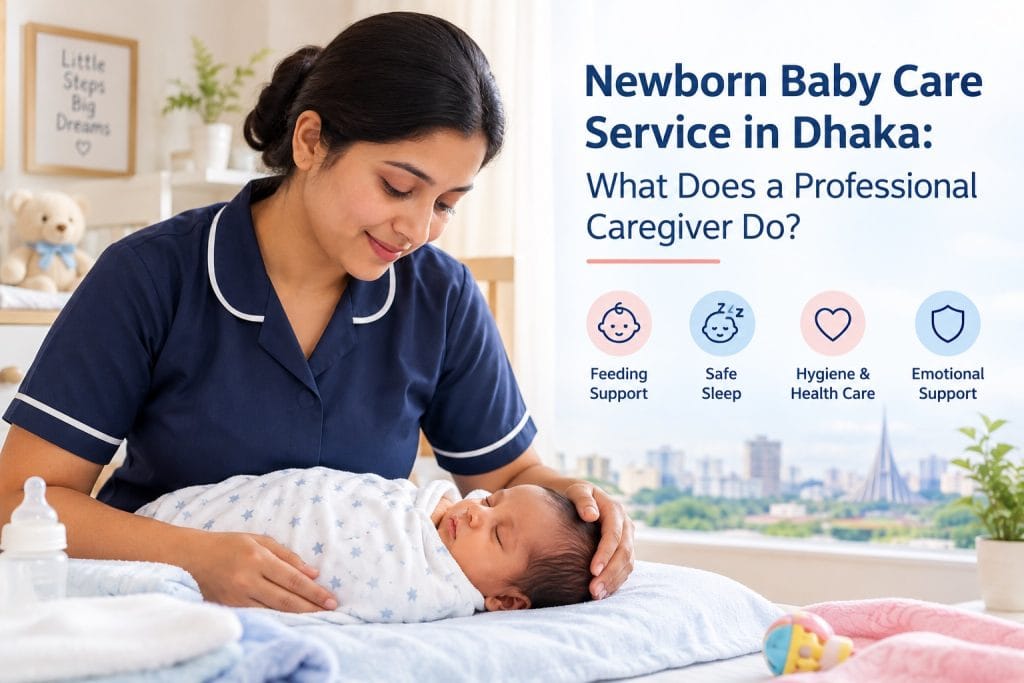
Newborn Baby Care Service in Dhaka: What Does a Professional Caregiver Do?
Introduction: Why Professional Newborn Baby Care Matters
Bringing a newborn home can feel exciting, beautiful, and overwhelming at the same time. Your baby needs attention almost around the clock. Feeding, sleeping, bathing, diaper changes, skin care, burping, and soothing can quickly fill your entire day.
This is where professional newborn baby care can make life easier.
A trained caregiver can support parents with everyday infant care while helping maintain a safe and comfortable environment. This support becomes especially useful when parents have limited time, need help at night, or want an experienced person beside them during the early weeks.
At Oxygen Hub BD, we understand that newborn care requires patience, attention, cleanliness, and responsibility. A professional caregiver does more than simply watch a baby. The caregiver supports feeding routines, hygiene, comfort, basic newborn needs, and communication with parents.
So, what exactly does professional newborn baby care include? Let’s explore it step by step.
What Is Newborn Baby Care?
Newborn baby care means providing daily support for a baby during the first weeks and months of life. It includes feeding assistance, diaper care, hygiene, safe sleep practices, clothing changes, soothing, observation, and maintaining a clean environment.
The first few weeks can feel like learning a new language. Your baby cannot tell you what hurts or what they need. You learn through crying, facial expressions, feeding patterns, sleep behavior, and other signals.
A professional caregiver understands these basic cues and follows the parents’ instructions carefully.
Professional care does not replace medical treatment. Instead, it provides practical childcare support and helps parents manage everyday routines more confidently.
Why Newborns Need Special Care
Newborns have delicate skin, developing immune systems, and changing feeding and sleeping patterns. They also cannot regulate their body temperature as effectively as older children.
That means small details matter.
A caregiver should wash hands before handling the baby, keep feeding equipment clean, change diapers regularly, use gentle products, and follow safe handling practices.
If a baby shows signs of illness, unusual breathing, poor feeding, persistent vomiting, fever, or another concerning symptom, parents should contact an appropriate healthcare professional promptly.
Newborn Baby Care 1st Month
The newborn baby care 1st month is one of the most demanding stages for new parents. Babies may feed frequently and sleep for short periods. Their daily routine can change quickly.
During this stage, caregivers can help with:
- Feeding support according to parental instructions
- Burping after feeds
- Diaper changes
- Gentle cleaning
- Clothing changes
- Safe sleep preparation
- Soothing and comforting
- Maintaining a clean baby area
- Monitoring routine changes
- Supporting parents with everyday childcare
Parents should still remain actively involved. Professional care works best when the caregiver and family communicate clearly.
Newborn Baby Care After Birth
Newborn baby care after birth starts with simple but important routines. The baby needs warmth, feeding, cleanliness, comfort, and close observation.
After returning from the hospital, parents may feel tired and unsure. A caregiver can provide practical assistance while the family settles into a new routine.
The caregiver can prepare the baby’s sleeping area, organize clothing, assist with diaper changes, help with feeding routines, and keep essential newborn baby care products organized.
However, medical instructions from the hospital or pediatrician should always take priority.
How to Take Care of a Newborn Baby
If you are wondering how to take care of a newborn baby, start with the basics. You do not need complicated routines. You need consistency, cleanliness, patience, and attention.
Feeding and Burping
Newborn feeding should follow the baby’s needs and the healthcare professional’s guidance. Breastfeeding may require patience while both mother and baby learn the process.
A caregiver can assist by preparing a comfortable feeding environment, helping with positioning according to parental or professional guidance, and keeping feeding items clean when bottle feeding applies.
After feeding, burping can help release swallowed air. Always handle the baby’s head and neck gently.
Diaper and Hygiene Care
Frequent diaper changes help keep the baby’s skin clean and comfortable. A caregiver should clean the diaper area gently and dry it properly before putting on a fresh diaper.
Hand hygiene also matters. Wash hands before and after diaper changes and before handling feeding equipment.
Safe Sleeping Environment
A newborn needs a safe sleep environment. Keep the sleeping area clear of unnecessary objects and follow current safe-sleep guidance from qualified healthcare professionals.
A professional caregiver should never improvise when it comes to sleep safety.
Comfort and Soothing
Why do babies cry? Hunger, tiredness, discomfort, wet diapers, temperature changes, or the need for comfort can all play a role.
A caregiver can try appropriate soothing methods while observing the baby’s behavior. Gentle holding, calm interaction, and a consistent routine can help.
How to Take Care of Newborn Baby Skin
Knowing how to take care of newborn baby skin is another important part of infant care. Newborn skin can be sensitive and may react to fragrances, harsh cleansers, or excessive rubbing.
Keep skincare simple.
Use gentle, baby-appropriate products and avoid unnecessary fragrances. Clean the baby’s skin carefully and keep folds dry. Diaper areas need regular cleaning and proper drying.
If the baby develops persistent redness, swelling, blisters, severe dryness, or another unusual skin problem, seek medical advice rather than trying random products.
Newborn Baby Care Products
The right newborn baby care products can make everyday routines easier. But more products do not always mean better care.
A practical setup should focus on useful essentials.
Newborn Baby Care Products List
A basic newborn baby care products list may include:
- Soft baby clothes
- Newborn diapers
- Gentle baby wipes or suitable cleaning materials
- Soft washcloths
- Baby towels
- Baby blanket suitable for the environment
- Baby-safe bathing products
- Feeding supplies when required
- Burp cloths
- Changing mat
- Baby nail-care tools
- Thermometer
- Diaper-care products recommended by a healthcare professional
Parents should choose products based on safety, quality, age suitability, and individual needs.
Care Kit
A well-organized care kit can save valuable time. Imagine needing a diaper at 2 a.m. and discovering that everything is scattered around the room. Not ideal, right?
Keep frequently used items together.
A caregiver can maintain a dedicated care kit with diapers, clean clothes, wipes, towels, burp cloths, and other daily essentials. This simple organization makes routines smoother.
What Does a Professional Caregiver Do?
A professional caregiver provides hands-on support with daily infant routines. The exact responsibilities depend on the family’s needs and the caregiver’s training.
Typical duties may include:
- Baby bathing assistance
- Diaper changing
- Feeding support
- Burping
- Baby clothing changes
- Basic hygiene
- Comforting the baby
- Organizing baby supplies
- Maintaining the baby’s immediate environment
- Supporting daytime or nighttime routines
- Updating parents about routine observations
A caregiver should follow family instructions and avoid performing medical procedures outside their qualifications.
Caregiver
A good caregiver brings more than experience. They bring patience, cleanliness, punctuality, communication, and emotional awareness.
Newborn care can involve repetitive tasks. A caregiver must still perform each task carefully.
Parents should also ask about experience, references, training, responsibilities, availability, and emergency procedures before selecting a caregiver.
Nanny Services
Nanny services can provide broader childcare support for families who need regular assistance. A nanny may help with newborn routines, feeding support, hygiene, clothing, sleep routines, and general baby supervision.
The family’s schedule determines whether they need part-time, full-time, daytime, nighttime, or flexible support.
A clear job description helps avoid confusion.
Babysitter
A babysitter usually provides temporary childcare support. Babysitting and professional newborn care are not always the same thing.
Newborns require specialized attention. Parents should therefore consider the caregiver’s experience with infants rather than choosing someone solely because they have experience with older children.
For very young babies, practical newborn-care experience matters.
Hospital
A hospital remains the appropriate place for urgent medical assessment and treatment. A caregiver does not replace a doctor, nurse, or hospital team.
Professional newborn care focuses on everyday support.
If a newborn has a concerning symptom, the caregiver should inform the parents immediately and follow the family’s medical plan. When necessary, parents should seek professional medical care without delay.
Childcare
Childcare for newborns requires a higher level of attention than ordinary supervision. Babies need frequent feeding, regular diaper changes, safe handling, and close observation.
A professional approach combines routine and flexibility.
The caregiver should follow the baby’s established routine while adapting to normal changes in feeding, sleep, and comfort.
Nursing
Nursing and newborn caregiving can overlap in some family settings, but they are not identical roles.
A licensed nurse has clinical training and can provide healthcare services within their professional scope. A general caregiver focuses mainly on daily childcare and routine support.
Families should choose the right professional based on the baby’s actual needs.
Care Giver
The phrase care giver often describes someone who provides personal care and practical support. In newborn care, the role demands responsibility because the caregiver works with a highly dependent infant.
Look for someone who understands hygiene, safe handling, feeding support, newborn routines, and appropriate communication with parents.
Trust should never replace proper screening.
Nanny Agency
A reputable nanny agency can help families find suitable childcare professionals. Agencies may assist with caregiver selection, scheduling, replacement support, and service coordination.
Before choosing an agency, ask about caregiver screening, experience verification, service terms, working hours, replacement policies, and customer support.
Do not hesitate to ask questions. You are choosing someone who will spend time caring for your baby.
Daycare
Daycare can work well for some families, but newborn daycare needs careful evaluation.
Parents should consider staff-to-child ratios, hygiene procedures, sleeping arrangements, feeding policies, emergency plans, caregiver experience, and communication practices.
For families who prefer care at home, an in-home caregiver may offer greater convenience and a more familiar environment.
Pros and Cons of Professional Newborn Baby Care
Professional newborn baby care can provide valuable support, but it is important to understand both benefits and limitations.
Pros
- Helps reduce the daily workload for parents
- Provides practical newborn-care assistance
- Supports feeding and hygiene routines
- Can offer daytime or nighttime assistance
- Gives parents more time to rest
- Helps organize baby-care supplies
- Provides experienced support during the early weeks
Cons
- Professional care adds an extra household expense
- Parents need to carefully screen caregivers
- Different caregivers may have different approaches
- Families must clearly communicate expectations
- Medical needs may require a qualified healthcare professional
The best solution depends on your family, schedule, budget, and baby’s needs.
Newborn Baby Care Tips for Parents
Here are practical newborn baby care tips every new parent can use:
- Wash your hands regularly. Clean hands reduce unnecessary exposure to germs.
- Keep baby supplies organized. You will appreciate this during late-night changes.
- Follow feeding guidance. Use recommendations from your healthcare professional.
- Keep the sleeping area safe. Avoid unnecessary items in the baby’s sleep space.
- Use gentle skincare. Newborn skin needs simple care.
- Watch for unusual symptoms. Contact a healthcare professional when something seems wrong.
- Communicate with your caregiver. Clear instructions create better care.
- Take care of yourself too. Exhausted parents need support, rest, and practical help.
Why Choose Oxygen Hub BD for Newborn Baby Care Support?
At Oxygen Hub BD, we believe family care should be practical, dependable, and focused on real needs. Families looking for newborn support need more than a name or a quick promise. They need clear communication and responsible service.
Our approach focuses on helping families manage everyday newborn routines with appropriate care and attention.
Whether you need daytime support, nighttime assistance, feeding help, or regular newborn-care support, choosing the right caregiver can make your daily life considerably easier.
A Simple Step Toward Easier Newborn Care
Your baby’s first weeks should not feel like a race against the clock.
If you need reliable support, contact Oxygen Hub BD today to discuss your newborn baby care needs and find a suitable care solution for your family. Give yourself more time to rest, recover, and enjoy those precious early moments with your baby.
Conclusion
Professional newborn baby care can make the transition into parenthood much easier. From feeding and diaper changes to hygiene, skincare, soothing, and daily routines, a trained caregiver can provide valuable practical support. The first month can feel challenging, but you do not have to manage every task alone. Choose support based on experience, safety, communication, and your baby’s individual needs. With the right approach and dependable childcare support from Oxygen Hub BD, families can create a calmer and more manageable newborn-care routine.
FAQs About Newborn Baby Care
1. What does newborn baby care include?
Newborn baby care can include feeding support, burping, diaper changes, hygiene, clothing changes, soothing, baby-supply organization, and general daily childcare.
2. When should I hire a newborn caregiver?
You can consider a caregiver before or after birth. Many families arrange support before bringing the baby home so they have help during the first few weeks.
3. Is a caregiver the same as a nurse?
No. A caregiver generally handles daily childcare tasks. A qualified nurse has clinical training and can provide healthcare services within their professional scope.
4. What should I look for in a newborn caregiver?
Look for newborn-care experience, reliability, hygiene awareness, patience, communication skills, references, and appropriate training.
5. Can a caregiver provide nighttime newborn care?
Yes, depending on the service arrangement. Some families choose nighttime support to help with feeding routines, diaper changes, soothing, and general baby supervision.
6. What newborn baby care products do I need?
Basic products can include diapers, soft clothes, towels, washcloths, suitable baby skincare products, feeding supplies when needed, a changing mat, and a thermometer.
7. How can I keep newborn skin healthy?
Keep the routine gentle. Use suitable baby products, avoid unnecessary fragrances, clean the skin carefully, and keep diaper areas and skin folds clean and dry.
8. Can newborn care replace medical treatment?
No. A caregiver provides everyday childcare support. Medical concerns require advice or treatment from an appropriately qualified healthcare professional.
9. Is home-based newborn care better than daycare?
It depends on your family’s needs. Home-based care can provide personalized support in a familiar environment, while daycare may suit families who prefer a childcare facility.
10. How can Oxygen Hub BD help with newborn baby care?
Oxygen Hub BD can help families explore suitable newborn-care support based on their schedule and daily childcare requirements. Contact the team to discuss your specific needs.